Green Communities in Dubai

Areas planned with greenery, quieter streets, and usable public space tend to reduce daily pressure, limit frequent moves, and support routines people maintain over time, which explains why eco-friendly communities in Dubai now play a clear role within broader UAE sustainable cities housing decisions.
Damac Hills
Damac Hills is one of the larger planned residential districts in Dubai, covering roughly 42 million square feet and hosting more than 4,000 homes. What sets it apart is how landscaping and energy-conscious design were built into the master plan from the start. Market data shows that environmental efficiency here translates into lower long-term operating pressure, with estimates pointing to a carbon impact notably lower than older villa suburbs. Studio apartments trade around AED 640k, while annual rents often begin near AED 47k. Direct access to Al Qudra Road helps keep leasing activity steady throughout the year.

Arabian Ranches
Arabian Ranches is primarily a villa-based community shaped around gated streets, parks, and internal green corridors. Developed by Emaar, it attracts residents who tend to stay longer, which explains the consistent villa ROI near 5.7 percent. A typical three-bedroom villa is priced close to AED 4.26M, while annual rents hover around AED 273k. Rather than chasing short spikes, this area benefits from predictable demand rooted in family living.

Mirdif as an eco-friendly neighborhood in Dubai
Mirdif remains unusual in Dubai because it combines central access with open parks and low-rise housing. Large green spaces such as Mushrif Park play a real role in daily life, not just visual appeal, and this setting also supports practical adoption of smart home automation in Dubai for everyday living, rather than show features. Studios usually start near AED 678k, with rents from around AED 45k per year. Demand here is driven more by residents looking for stability and long-term routines than by short-term investors.
Emirates Hills
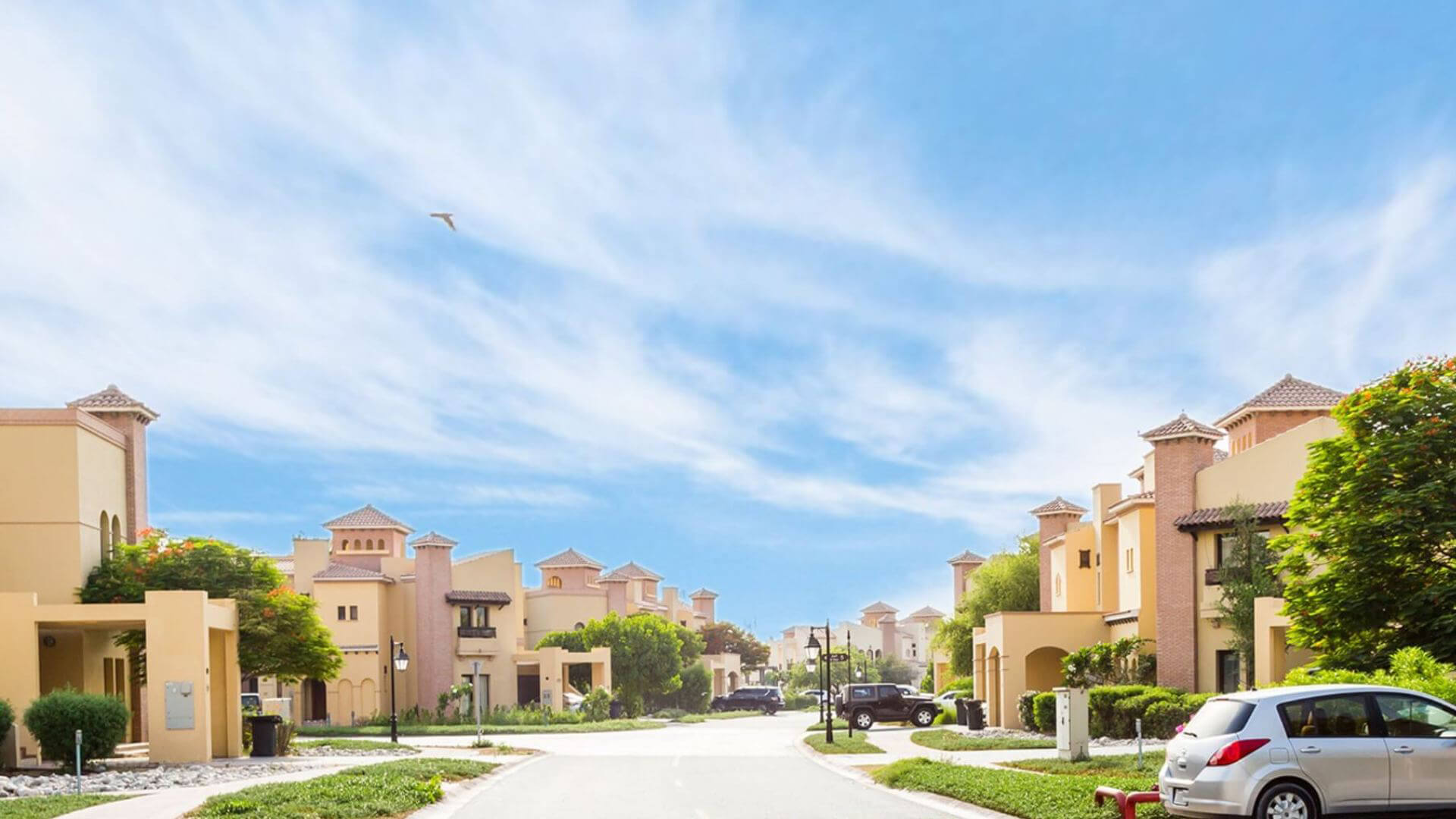
Emirates Hills feels more like a private enclave than a typical residential area. The neighborhood covers roughly 400 hectares, yet only around 7,500 residents live there, which keeps the density intentionally low. Villa prices usually begin near AED 11 million, and high-end rentals can pass AED 1.7 million per year. Yields average close to 3.3 percent, a level that reflects how buyers here focus less on income and more on protecting value, helped by limited supply and the presence of established golf courses.

The Green Community Dubai
Located within Dubai Investment Park, The Green Community Dubai focuses on low-rise buildings, generous gardens, and quieter internal roads. Apartments generally start around AED 950k, while larger villas can rent for more than AED 470k per year. The area has built a reputation for stable occupancy, which is why the green community in Dubai is often cited when discussing long-term family housing.
Al Furjan
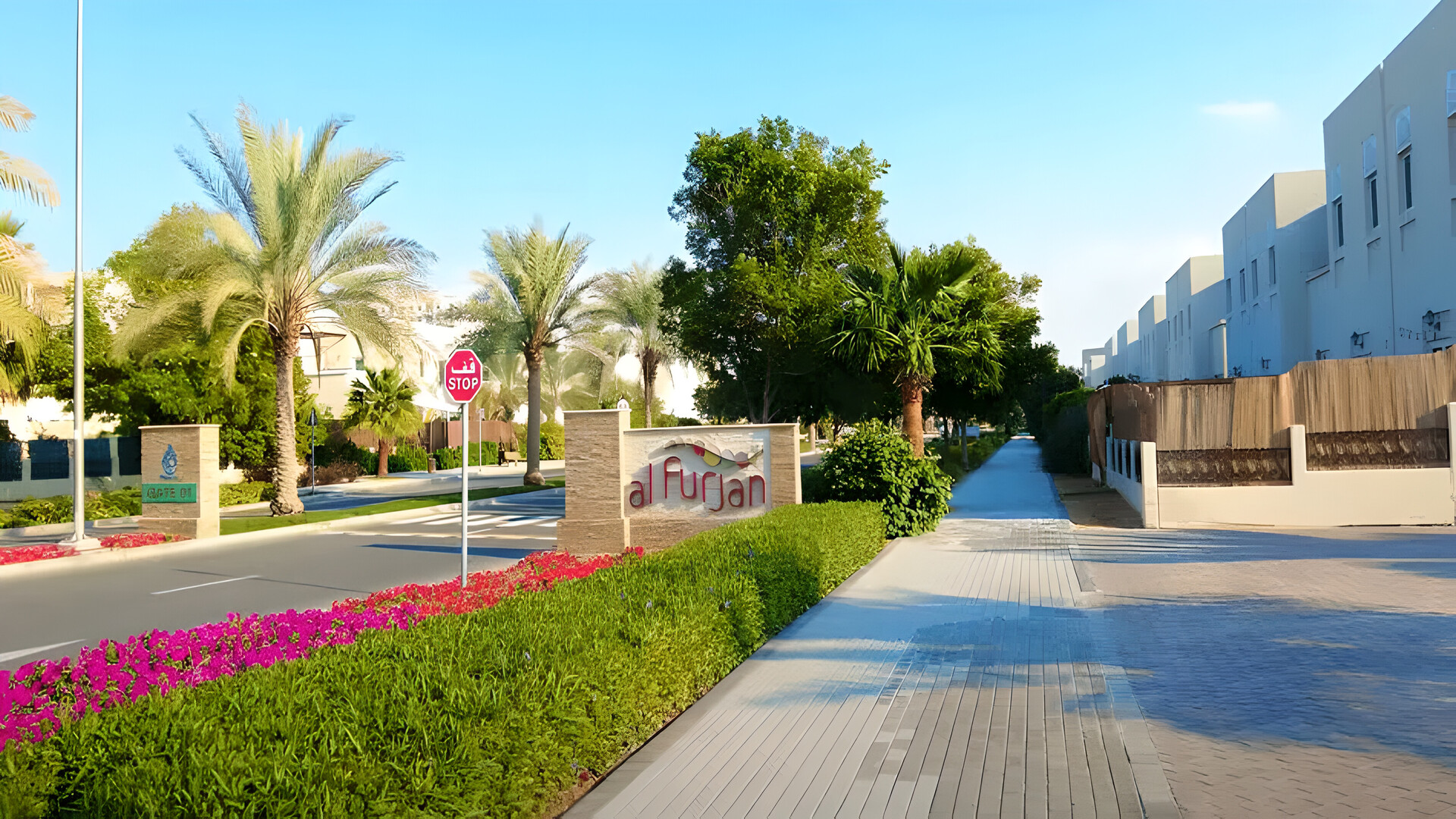
Al Furjan balances mid-density housing with parks and open spaces, making it attractive to both tenants and buyers. Two-bedroom apartments typically start near AED 1.5M, while studios rent for about AED 55k annually. Yield figures ranging from 5.5 to 10 percent show how infrastructure access and metro connectivity translate into income reliability.
Al Barari Green Community in Dubai
Al Barari dedicates roughly 60 percent of its land to greenery, including more than 5 kilometers of water features. This level of environmental integration is rare in Dubai. Studios average around AED 983k, while four-bedroom villas can rent close to AED 1.5M per year. Returns between 6.7 and 7.2 percent reflect limited supply and strong end-user demand.
Dubai Hills Estate
Dubai Hills Estate includes about 2.2 million square meters of open green space anchored by a golf course and a central park. Studios usually enter the market around AED 1.1M, with rental yields commonly falling between 5 and 8 percent. Walkable design and energy-efficient construction link the area to wider UAE sustainable cities objectives.
Dubai Silicon Oasis
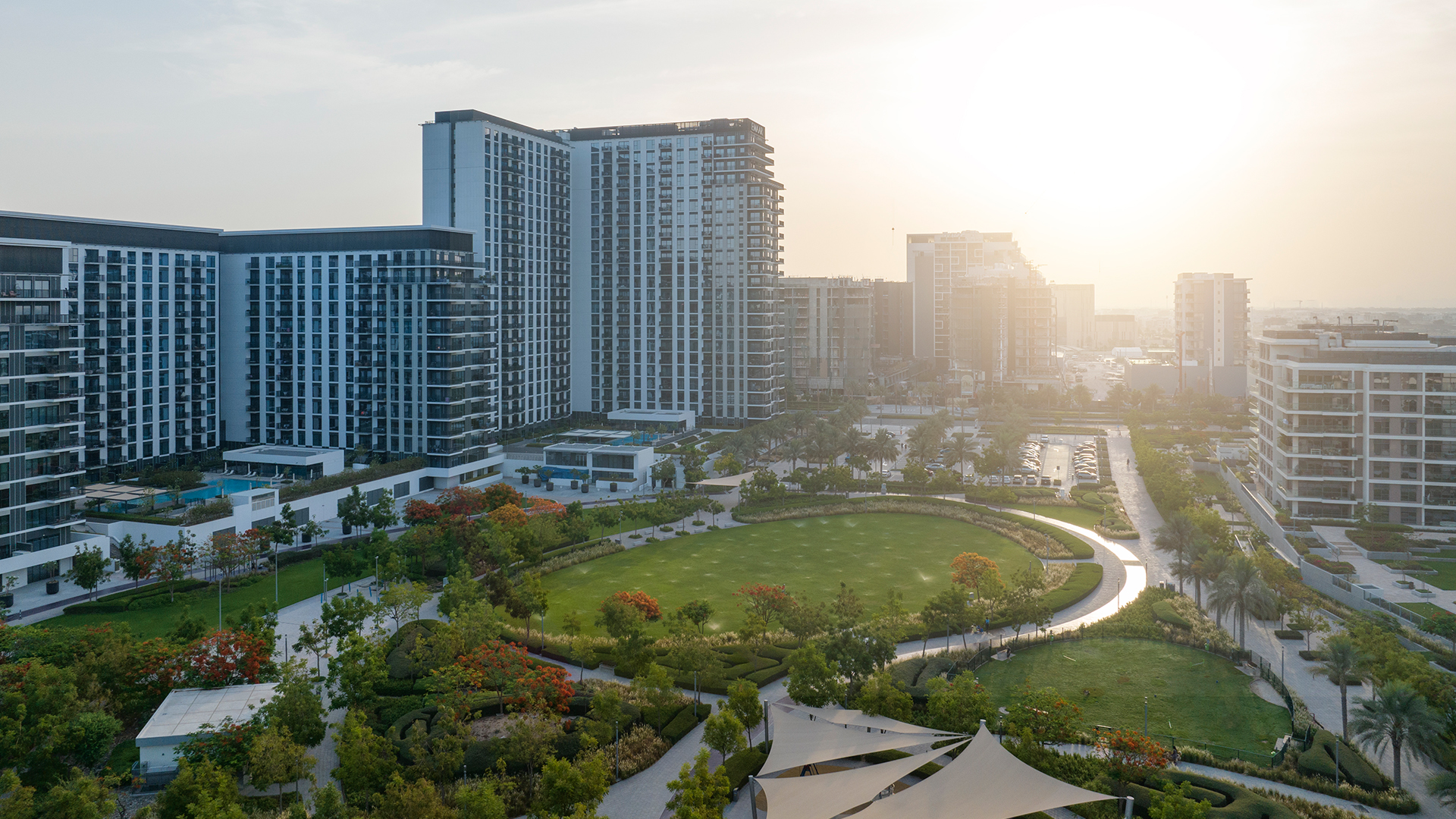
Dubai Silicon Oasis spans roughly 7.2 million square meters, with about 1.2 million square meters reserved for landscaped areas. Two-bedroom units average near AED 820k, while rental yields can approach 9.7 percent. Systems such as greywater reuse, smart irrigation, and digital infrastructure help control operating costs at scale.
The Sustainable City
The Sustainable City Dubai is built around about 500 homes supported by solar power, water recycling, and electric vehicle infrastructure. Utility savings of up to 50 percent are commonly reported. Villas average around AED 4.4M, with returns close to 8.6 percent. The appeal here lies in long-term cost visibility rather than rapid appreciation.
The Greens as an Eco-friendly Community in Dubai
The Greens consists of ten apartment clusters arranged around internal courtyards and lakes. Studios typically rent for AED 62k annually. Recycling programs, walkable retail, and moderate pricing supports steady tenant absorption without relying on premium positioning.

Discovery Gardens
Discovery Gardens covers around 26 million square feet, with more than 30 percent of the land allocated to green space. Studio rents average close to AED 46k per year. Its affordability and themed landscaping continue to attract residents looking for eco-friendly neighborhoods in Dubai without higher entry costs.
DAMAC Hills 2
DAMAC Hills 2 applies solar water heating and low-emission materials across its housing stock. Studio rents begin near AED 41k annually, placing it among the most accessible eco-friendly communities in Dubai for entry-level renters.
Jumeirah Golf Estates
Jumeirah Golf Estates is organized into sixteen neighborhoods surrounding championship golf courses. Villas typically rent for AED 258k per year. Sustainability awards, EV facilities, and wellness-oriented planning support demand from long stay households.
Expo Valley
Expo Valley sits close to Expo City and was shaped around the existing landscape rather than built over it. Villas and townhouses follow the natural wadi and lake layout, which softens the heat and limits dust movement across the area. Shaded walking paths and calm internal streets encourage daily movement without relying on cars, making the environment feel quieter and more balanced for long-term living rather than seasonal use.
Ghaf Woods
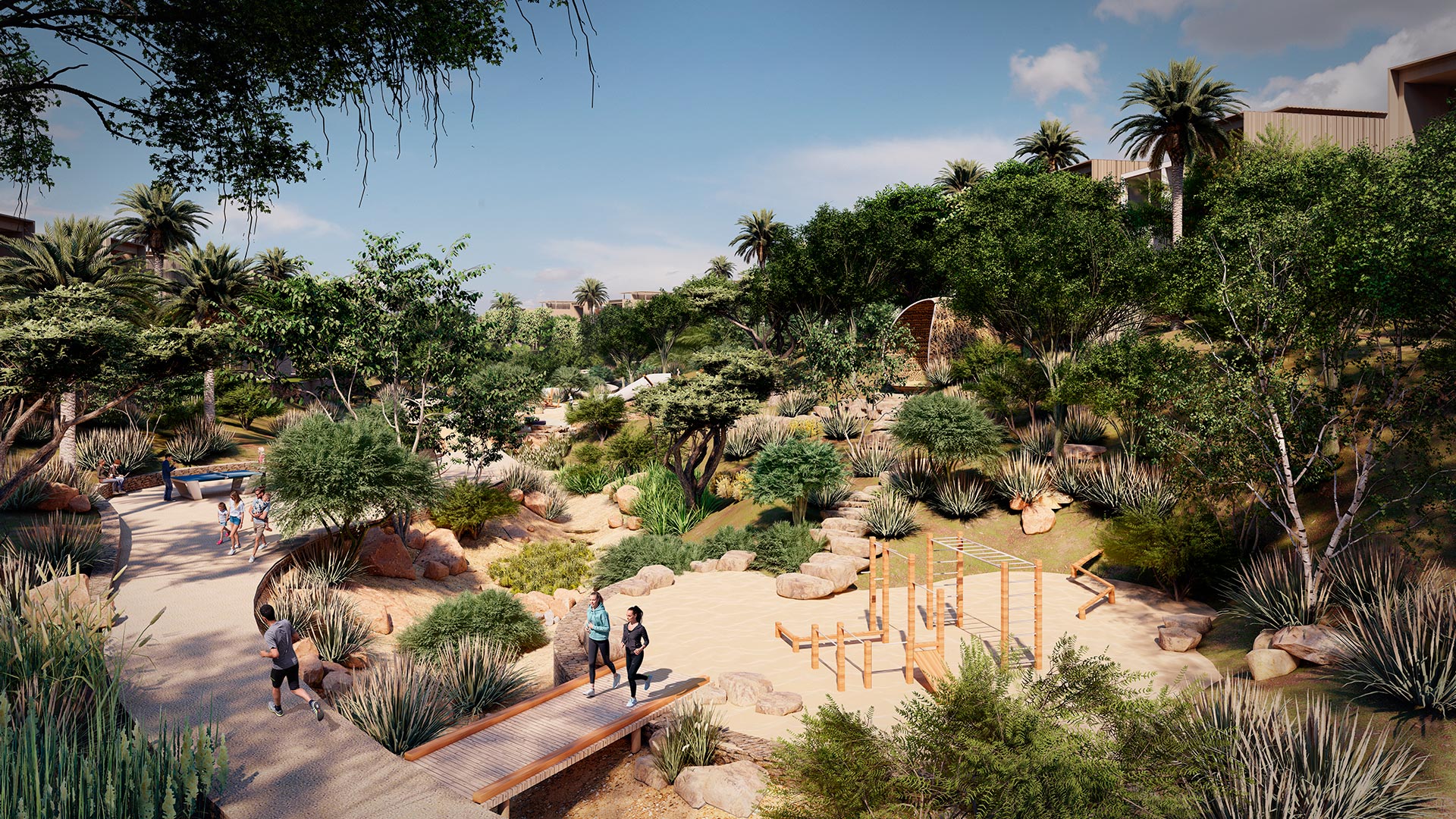
Ghaf Woods is planned around the native Ghaf tree, which already thrives in the local climate and requires less intensive irrigation. The layout favors walking over driving, with shaded paths woven through dense planting. Studies cited by Lavinia Properties suggest that this approach can lower surrounding temperatures by up to 5 degrees, a change residents actually feel during daily routines and one that supports comfortable living over time.
|
Community |
Typical Property Entry |
Main Practical Advantage |
|
DAMAC Hills |
Studio from AED 640k |
Lower utility pressure |
|
Arabian Ranches |
Villa from AED 4.26M |
Long tenant retention |
|
Mirdif |
Studio from AED 678k |
Central Park access |
|
Emirates Hills |
Villa from AED 11M |
Capital protection |
|
The Green Community |
Apartment from AED 950k |
Stable family demand |
|
Al Furjan |
Apartment from AED 1.5M |
Strong rental yield |
|
Al Barari |
Studio from AED 983k |
High green ratio |
|
Dubai Hills Estate |
Studio from AED 1.1M |
High resale liquidity |
|
Dubai Silicon Oasis |
Apartment from AED 820k |
Cost-efficient living |
|
The Sustainable City |
Villa from AED 4.4M |
Reduced utility bills |
|
The Greens |
Studio from AED 62k rent |
Walkable daily needs |
|
Discovery Gardens |
Studio from AED 46k rent |
Affordable green living |
|
DAMAC Hills 2 |
Studio from AED 41k rent |
Entry-level access |
|
Jumeirah Golf Estates |
Villa from AED 258k rent |
Wellness-driven demand |
|
Expo Valley |
Townhouse off-plan |
Microclimate comfort |
|
Ghaf Woods |
Apartment off-plan |
Heat reduction design |
Conclusion on the Green Community Dubai
In many parts of Dubai, you can see how everyday comfort depends less on branding and more on how a community works once people settle in. Areas planned with greenery, manageable density, and reliable infrastructure often reduce ongoing pressure, such as rising utility costs or frequent tenant changes.
Over time, this leads to more stable living patterns and fewer forced decisions, even when the wider market slows. You gain clarity by focusing on how a district performs in daily use rather than how it looks at launch. If you plan to buy property in Dubai, you can contact Kotook for a free consultation to review real transaction data, rental behavior, and long-term performance before making a decision.
Frequently asked questions
A green community typically includes energy-efficient buildings, smart water systems, renewable energy sources like solar panels, and lots of green spaces. These neighborhoods are designed to reduce carbon footprints and promote healthier, more eco-conscious living.


