Net Zero Emissions in 2026

Table of Contents
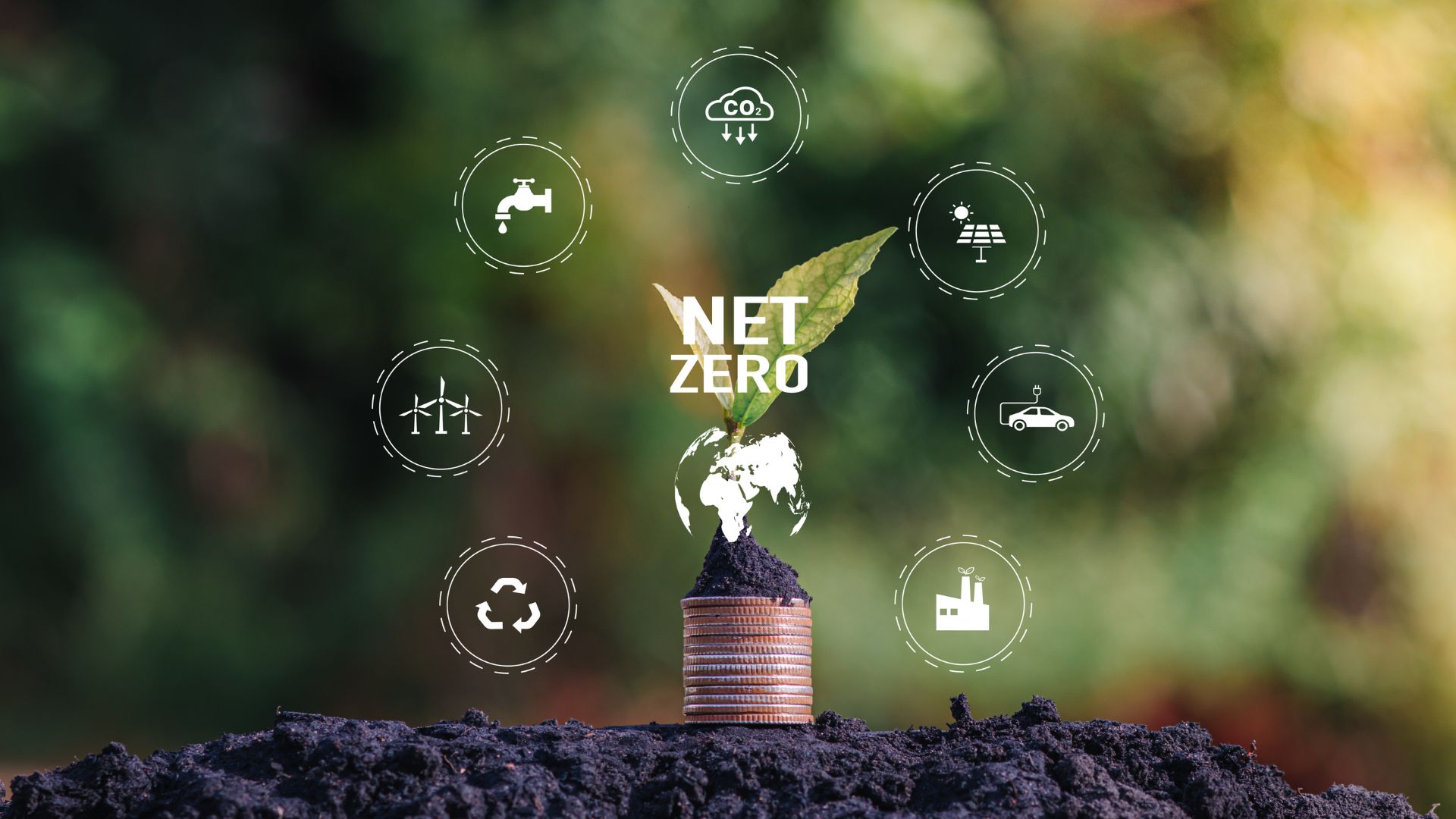
Net zero describes a balance where the amount of greenhouse gases released into the atmosphere equals the amount removed. In 2026 this concept is no longer abstract.
According to Net Zero Climate and official UN-aligned frameworks, net zero requires deep emission cuts first, then limited use of removals such as natural sinks or carbon capture.
The key fact is that most global strategies now target net zero emissions by 2050 as a baseline for economic planning. The insight is that net zero functions as a system-wide rule, not a voluntary action.
It reshapes energy production, industry transport, and consumption patterns. The result is predictable change rather than sudden disruption. The rational step is to understand this framework early and evaluate decisions with long-term climate alignment in mind.

What Net Zero Means in the UAE Context
Many people struggle to understand what net zero emissions actually require in practice. According to Net Zero Climate and the United Nations framework, net zero emissions means total human-caused emissions are balanced by removals within the same system by mid-century.
The UAE provides a clear example. In 2026 official data shows the country targets large-scale emission reduction across power, transport, and industry while expanding natural carbon sinks such as mangroves.
The insight is that reduction comes first and removals remain limited. This approach reduces policy risk. The practical step is to follow national progress reports and sector data before making long-term decisions.

UAE Net Zero Strategy Scope and Timing
Public concern often centers on whether national climate plans stay symbolic or become enforceable. Official UAE records show a defined timeline with fixed review points. In 2026, the UAE confirmed annual tracking of sector output and a full strategy review every five years through federal reporting channels.
This creates predictability. The message is that climate policy now follows measurable cycles. The result is reduced uncertainty for planning decisions. The practical step is to monitor federal progress reports rather than policy headlines.
Global Climate Pressure and Sector Responsibility
Climate change is not driven by one country or one industry. According to the International Energy Agency, global energy-related carbon dioxide emissions reached about 38 gigatonnes in 2024.
Power generation alone accounted for roughly 40 percent, followed by transport at around 22 percent and heavy industry close to 25 percent. This pattern appears across major economies.
In China, electricity and industry dominate emissions. In the United States transport remains the largest source. In the European Union, power and manufacturing lead. The insight is shared responsibility. Every country focuses first on sectors it can regulate directly. This approach reduces disruption.

Energy Transition as a Global Signal
The global energy shift is already underway, not a distant forecast. According to the International Energy Agency, renewable sources are expected to overtake coal as the largest source of global electricity before 2030, driven by rapid growth in solar and wind capacity across Asia, Europe, and North America.
At the same time nuclear power continues to play a stabilizing role in several major economies. France relies on nuclear for most of its electricity supply. The United States maintains nuclear as a core baseload source.
The UAE has added nuclear capacity to support grid reliability. The key point is infrastructure. When power assets are already built and operating, policy moves from intention to delivery.
This shift changes cost dynamics. Energy pricing becomes less exposed to fuel market swings and more linked to long-term capital planning. Platforms such as Kotook help interpret how these system-level changes connect with urban and economic data rather than headlines.
Governance and Timing Across Countries
Climate strategy only works when governance is clear. The European Union introduced binding climate law in 2021. The United States anchored climate investment through the Inflation Reduction Act in 2022.
China set sector caps and reporting cycles before 2025. The UAE formally adopted net zero as national policy in 2021, aligning reporting with UN frameworks.
Dubai Net Zero Data Use in Property Decisions
Sustainability is mentioned everywhere, but clear numbers are often hard to find. By 2027 this lack of clarity will have real consequences.
Net zero policy already affects how projects receive approvals, how infrastructure budgets are set, and how construction rules are written across Dubai.
The factual shift is that environmental performance is becoming observable through data rather than promises. The insight is simple. When emissions targets guide urban policy, data becomes a filter for quality.
The result is that informed comparison reduces long-term risk. The practical step is to rely on structured data sources that reflect these changes.
Kotook's Role Within the Net Zero Framework
Kotook operates as a unified sustainability aggregator rather than a listing-focused platform. Its structure connects real estate data, smart building inputs, and low carbon indicators within the context of the UAE's net zero direction. This role matters because net-zero outcomes depend on system-level coordination, not isolated features.
Kotook organizes information across four measurable layers:
-
Sustainability
Low-carbon building inputs and design indicators tied to energy and resource efficiency
-
Real data
Verified project and community data used to support comparison rather than projection
-
Artificial intelligence
Pattern analysis that helps identify efficiency signals across buildings and districts
-
Social awareness
Information that reflects how communities engage with sustainable living practices
Sustainability Metrics in Practice Across Dubai
Several Dubai developments now publish clear sustainability scores that reflect planning and design performance.
-
Sobha Sanctuary reports a greenness score of 64.5 out of 100
-
Bay Villas in Dubai Islands records a score of 57.5
-
Greencrest shows a score of 52.5
-
Samana Skyviews reports a score of 51.5
Net-zero policy turns sustainability into a planning rule. The rational action is to evaluate property choices through data frameworks that reflect this shift rather than surface descriptions.

Global Net Zero Reality in 2026
The climate story in 2026 is no longer about awareness. It is about measurable signals that show how fast the system is shifting.
The World Meteorological Organization reported a 3.5 ppm jump in global atmospheric CO2 from 2023 to 2024, the largest annual increase since modern measurements began in 1957.
That same update notes greenhouse gases remain far above pre-industrial levels, with methane about 16 percent higher and nitrous oxide about 25 percent higher.
Sea level is another hard indicator. WMO data shows the long-term rate of global mean sea level rise has more than doubled, from 2.1 mm per year from 1993 to 2002 to 4.7 mm per year from 2015 to 2024, with 2024 reaching a record high in the satellite record.
Policy has followed the science, unevenly but at scale. Climate Action Tracker reports that by October 2025, about 145 countries had announced or were considering net zero targets, covering close to 77 percent of global emissions.
The gap is execution. UNEP reports global greenhouse gas emissions reached 57.1 GtCO2e in 2023, and its later analysis stresses that deep cuts are needed within the next decade to stay aligned with Paris pathways.
|
Global Climate Indicator |
Latest Verified Value |
|
Atmospheric CO2 level |
419 ppm average |
|
Annual CO2 increase |
3.5 ppm rise |
|
Global emissions total |
57.1 GtCO2e |
|
Energy CO2 emissions |
38 Gt CO2 |
|
Sea level rise rate |
4.7 mm per year |
|
Countries with net zero targets |
About 145 countries |
|
Emissions covered by targets |
About 77 percent |
|
Methane vs preindustrial |
16 percent higher |
|
Nitrous oxide vs preindustrial |
25 percent higher |
UAE Dubai Net Zero Conclusion Outlook
Uncertainty remains the main concern for people facing climate-driven change. Verified global tracking shows that by 2026 more than 140 countries have adopted net-zero emissions targets covering most global output.
This scale confirms the direction is structural, not temporary. The insight is that policy alignment reduces future shock by setting shared rules. The effect for household investors and institutions is clearer planning across energy work and mobility.
A stronger path forward is clarity. When decisions are guided by verified long-term signals rather than short-term reactions, uncertainty loses its grip.
Net zero becomes a reference point that helps people plan energy use, work patterns, and investment choices with confidence rooted in direction, not speculation.
Tags:
Frequently asked questions
Net zero emissions by 2050 means balancing human-caused emissions with removals so total greenhouse gases added equal zero globally.


